


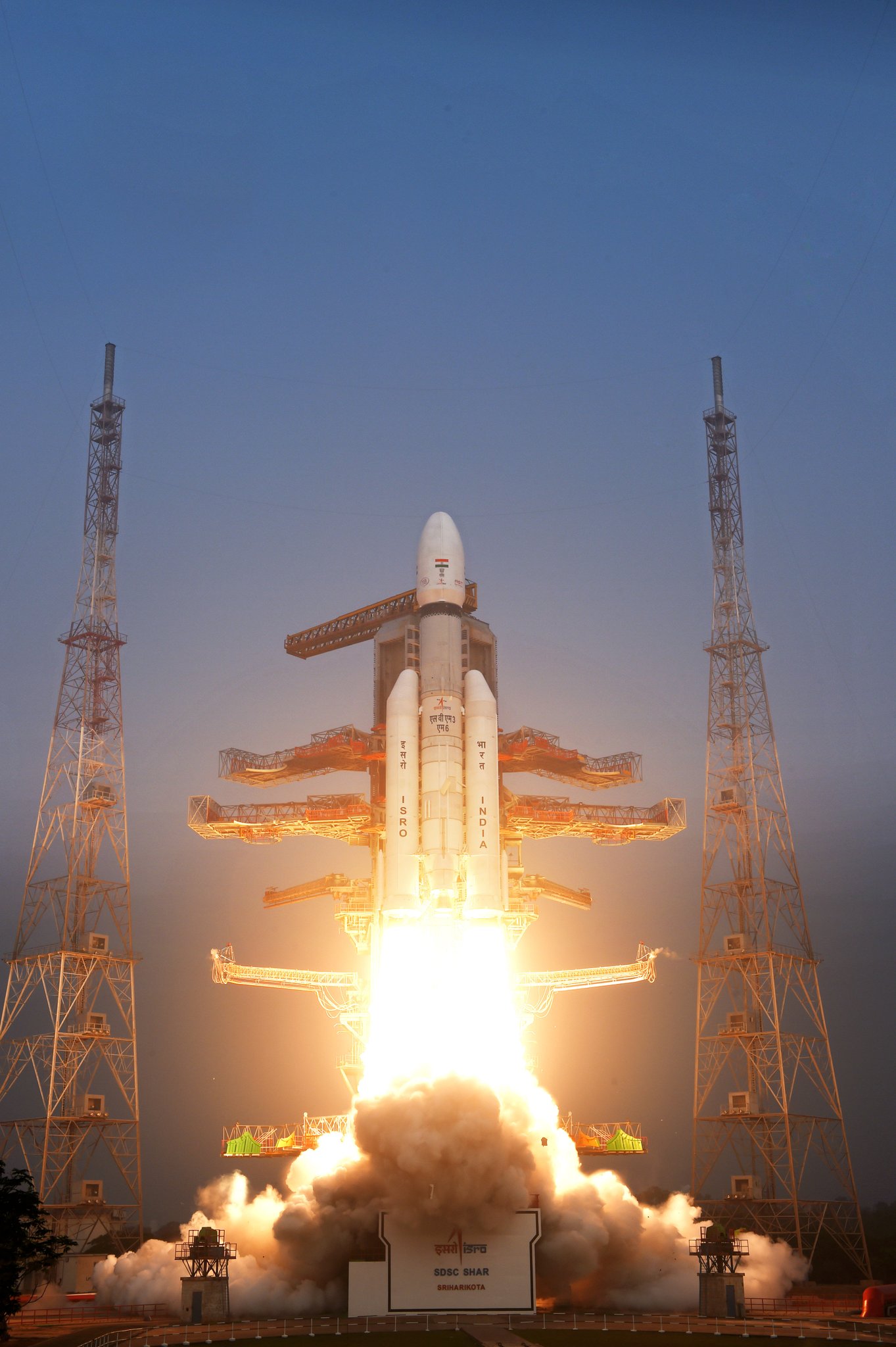
On 24 December 2025, the Indian Space Research Organisation (ISRO) achieved a landmark success with the LVM3-M6 mission, lofting the BlueBird Block-2 satellite into low Earth orbit (LEO). This event marked not just another addition to India’s impressive series of space missions, but a potential turning point in how mobile broadband is delivered across the planet. The satellite — launched aboard ISRO’s heavy-lift LVM3 rocket from the Satish Dhawan Space Centre — stands as the heaviest commercial payload ever carried by the vehicle.
What makes this launch particularly noteworthy is the underlying technology and ambition: space-based cellular broadband that can connect everyday mobile phones without relying on traditional ground infrastructure. Here, we explore why this development matters, how it could alter connectivity landscapes in India and abroad, and what challenges and opportunities lie ahead.
From Ground Towers to Low Earth Orbit
Traditionally, mobile communications depend on a dense network of ground-based towers, fibre infrastructure, and relay stations. These systems have served urban and suburban populations well, but they struggle in remote, sparsely populated or geographically challenging regions. Building and maintaining towers in mountainous terrain, deserts, forests, or open seas can be prohibitively expensive and logistically complex.
The BlueBird Block-2 initiative — developed by US-based AST SpaceMobile and deployed via ISRO’s mission — proposes a different path: using a constellation of satellites in low Earth orbit to deliver cellular broadband directly to standard mobile phones. What sets this system apart is its ability to reach handsets without requiring specialised hardware or modifications.
Space-based cellular broadband thus bridges the last mile not by extending the terrestrial network but by overarching it from space.
Why Bluebird Matters for Connectivity in India
India’s digital journey over the past decade has been remarkable. Mobile penetration is high, with billions of subscribers and rapidly growing data consumption. Yet, coverage remains uneven. Rural areas and certain geographical zones still have limited access to high-speed data services. In such contexts, conventional network rollouts are often slow and expensive.
Space-based broadband could complement terrestrial infrastructure in several ways:
1. Reaching underserved areas
Regions where laying fibre or installing towers is cost-prohibitive could become viable markets for mobile broadband services. In India’s mountainous northern frontier, the Andaman and Nicobar Islands, or even the expansive Thar Desert, satellites like BlueBird can deliver connectivity where towers cannot.
2. Supporting disaster resilience
In natural disasters such as cyclones, earthquakes or floods, terrestrial networks are often the first to fail. Satellite broadband can serve as a resilient fallback, maintaining communications for emergency responders and affected communities. This makes national preparedness more robust.
3. Enabling economic inclusion
Digital services underpin much of modern economic participation — from digital payments and remote work to access to education and healthcare information. By lowering barriers to mobile broadband, space-based connectivity could help bridge socio-economic divides.
4. Extending coverage over water and borders
Terrestrial networks rarely extend into open seas or remote borderlands. Yet mobile access in these regions is essential for fishermen, maritime workers, defence personnel and border communities. Satellite connectivity fills this gap in a way terrestrial systems cannot.
Globally, a New Connectivity Layer
Space-based cellular broadband has implications far beyond India’s borders.
Competing and complementing existing technologies
Companies like SpaceX with Starlink and Amazon’s Project Kuiper are building broadband constellations as well. However, these systems often depend on specialised user equipment such as dedicated dishes or terminals. The BlueBird model is distinct in that it is designed to speak directly with existing mobile phones.
This approach, if fully realised, could spur a new era of global mobile coverage without incremental hardware costs to end users. As satellite technology becomes more integrated with terrestrial 4G and 5G networks operated by mobile carriers, the seamless user experience could transform global connectivity.
Partnerships with mobile operators
AST SpaceMobile has already lined up partnerships with more than 50 mobile network operators globally. This integration means that space-based coverage wouldn’t replace traditional networks but would augment them, particularly in places where coverage is weak or non-existent.
Technical & Operational Challenges
Despite its promise, the vision is not without hurdles. Space-based broadband systems must contend with:
Latency and signal strength
The physics of satellite communications — especially in LEO — can introduce latency and require careful power management to maintain usable signal strength to small, handheld devices.
Spectrum allocation
Space and terrestrial services must coexist within limited radio frequency bands. Coordinating spectrum allocation and avoiding interference is a regulatory and technical challenge that involves international agreements and standards.
Cost and scalability
Building and deploying a constellation of satellites, ground operations and supporting infrastructure is capital-intensive. Although LEO systems can reduce latency compared with geostationary satellites, they require many more satellites to maintain continuous coverage.
Even so, as launch costs fall and satellite technology advances, these barriers are becoming more manageable.
India’s Strategic Role in Space-Based Connectivity
The success of the LVM3-M6 mission underscores India’s evolving role in the global space economy. ISRO’s LVM3 rocket is one of the most reliable heavy-lift launch vehicles in operation, and though it has historically been used for national scientific and exploratory missions — such as Chandrayaan and Gaganyaan preparations — it is increasingly supporting commercial clients.
Under the aegis of NewSpace India Ltd (NSIL), ISRO’s commercial arm, more international partnerships are emerging. Launch services for foreign communication satellites demonstrate India’s competitiveness in the space launch market, offering both technical expertise and cost advantages. This mission — placing BlueBird Block-2, the largest commercial LEO communications satellite to date — also reflects India’s growing stature in global space commerce. The Economic Times shows.
Beyond Connectivity: Broader Social Impact
The potential of space-based cellular broadband extends into societal transformation:
Education and remote learning
With global access to broadband, remote educational content can reach students in under-resourced regions. This can level the educational field across socio-economic lines.
Healthcare
Telemedicine and mobile health services depend on reliable connectivity. For rural and remote regions, space-based broadband could unlock access to diagnostic services, patient monitoring, and health information previously inaccessible.
Economic opportunity
Connectivity fuels entrepreneurship. Markets, services, freelance work and digital enterprises can flourish in areas that were previously offline. This broadens economic participation and drives local innovation.
Conclusion: A Connected Future from Space
The ISRO LVM3-M6 / BlueBird Block-2 launch is more than a milestone in aerospace engineering. It is a harbinger of a connectivity paradigm shift. By enabling space-based cellular broadband accessible to everyday mobile phones, this technology could finally extend reliable mobile coverage to the remotest corners of the world — without towers, cables or specialised devices.
India’s role in this development is significant. From technical prowess in launch vehicles such as the LVM3 to international partnerships that facilitate cutting-edge satellite deployments, the nation is carving out a niche in the rapidly expanding commercial space sector.
If realised at scale, space-based cellular broadband could not only redefine connectivity but also generate far-reaching socio-economic benefits — from education and healthcare to disaster resilience and digital inclusion. In an era defined by communication and data, this represents an ambitious step toward a truly connected global society.