


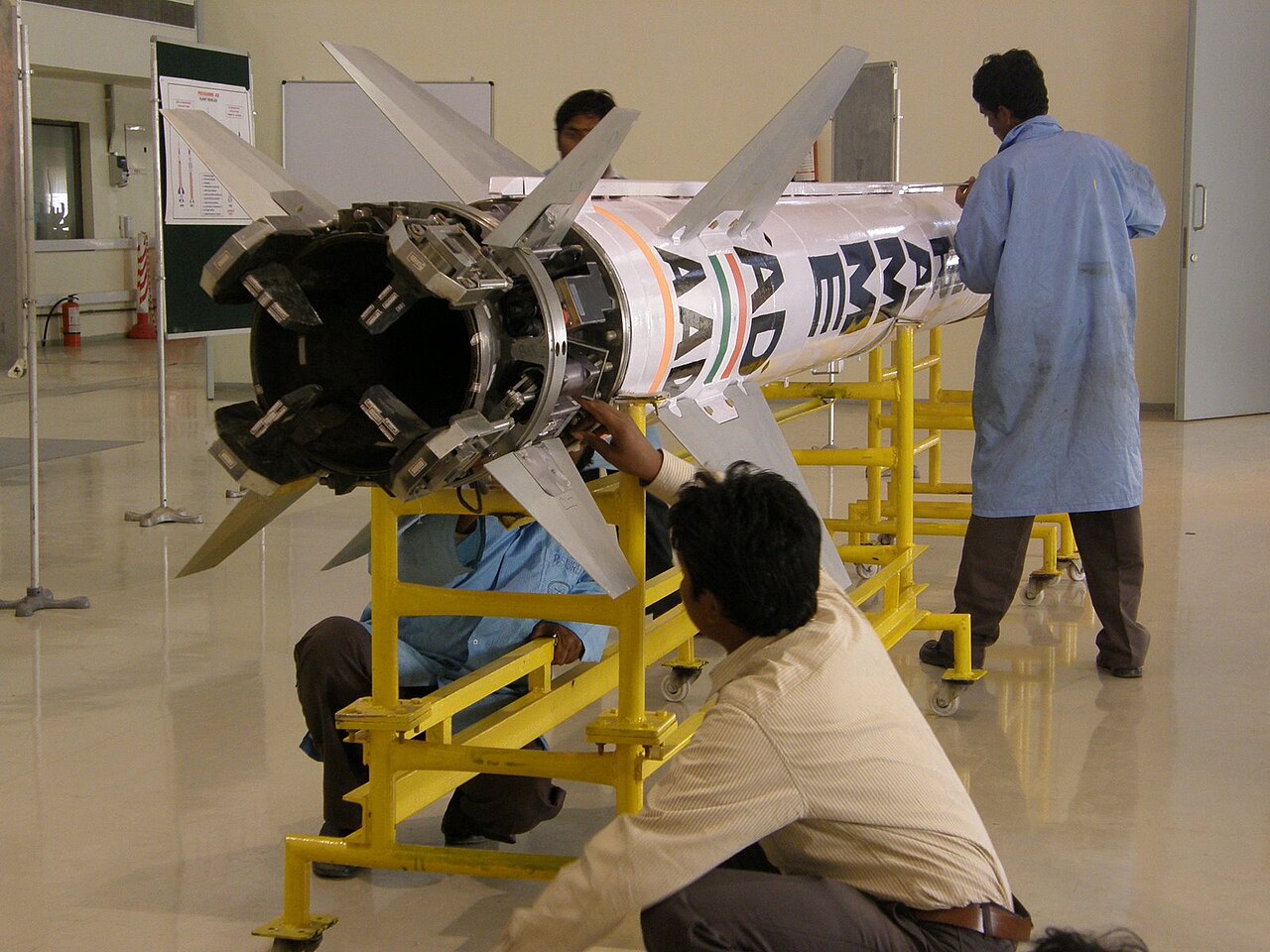
India’s defence manufacturing base has expanded at pace. Industrial bottlenecks in defence manufacturing in India are increasingly shaping how quickly military capability can be translated from policy intent into deployable force. The defence production in the country hit record levels in FY 2024–25 and exports reached new highs. And yet the same structural chokepoints that challenge allies also constrain India’s throughput. Critical materials, energetics and propellants, tooling & testing, workforce depth, procurement governance, and technical interoperability leave a lot to be desired. Understanding these bottlenecks in India’s specific context is essential to translate headline contracts into sustained output at war‑relevant tempo. Post‑OFB corporatisation into seven DPSUs, a surge of private‑sector entrants, and a push on critical minerals & rare‑earth magnets.
Critical Materials and Import Dependencies in India’s Defence Industry
Modern munitions, sensors and propulsion systems rely on critical minerals and rare‑earth magnets. India possesses monazite‑rich coastal sands and has launched a National Critical Mineral Mission (2025) to scale exploration and reduce import dependence. On the other hand, IREL (India) Ltd expands domestic rare‑earth oxide refining. In late‑2025 the Union Cabinet approved a ₹7,280‑crore scheme to build an end‑to‑end rare‑earth permanent magnet (REPM) value chain. This contains everything from oxides to sintered NdFeB magnets—to localise 6,000 MTPA of magnet capacity and cut exposure to Chinese export controls.
Why this matters for defence: guided munitions, seekers, gimbals, radars, high‑power actuators, and electric drives all lean on NdFeB magnets. India’s magnet imports nearly doubled in FY2024–25. Localisation aims to reduce the single‑point‑of‑failure risk visible after China’s 2025 licensing curbs. Independent trackers and trade coverage note the scheme’s design:
Capital subsidy + sales‑linked incentives, and a plan to select five firms to stand up integrated plants within seven years.
India’s NCMM + REPM scheme brings the materials layer into the heart of defence planning. Success now hinges on rapid oxide‑to‑metal and metal‑to‑magnet capability establishment and supplier pre‑qualification for defence programmes.
Energetics, Propellants and Ammunition Production Constraints
Artillery shells, rockets and missiles are gated by propellants and explosives. India is scaling energetics, from TNT capacity (e.g., new Nagpur plant, 3,000 tpa) to composite propellants for Pinaka and other systems. Private explosives firms report large defence order books. On the other hand, Pinaka rockets (EEL/MIL) and Area Denial Munitions have seen significant domestic contracts under ‘Aatmanirbharta‘. But a persistent vulnerability is nitrocellulose—a base energetic for propellants—that still sees import reliance for defence‑grade volumes, prompting industry proposals for domestic NC facilities.
On the rocket‑artillery side, Pinaka has moved from 1,000 to 5,000 rockets per year (Mk‑I baseline). It is also transitioning guided and Mk‑III (120 km) variants into production and trials with state‑private collaboration (DRDO, EEL, MIL, TASL, L&T; BDL on advanced variants). Guided Pinaka entered mass‑production after 2024 validation; exports began with Armenia in 2023–26. These trajectories show how energetics + sub‑tier suppliers + launcher integrators must scale in step.
India should prioritise domestic nitrocellulose and rocket‑motor energetics, expand proof & testing capacity, and lock long‑term propellant offtakes so private and DPSU suppliers can justify capex beyond sporadic orders.
Tooling, Testing and Qualification Delays
“Ramp up” only happens after forging, machining, heat‑treat, explosive filling, and proof infrastructure is installed and qualified. India’s corporatised DPSUs—notably Munitions India Ltd (MIL) and Yantra India Ltd (YIL)—plus private firms are adding shell‑body lines, fuse machining, propellant charges and filling capacity. Reports show large export orders for shell bodies and components (e.g., 100,000 L15/M107 cases; additional private‑sector orders), but first‑article tests and ballistics proofing still govern how quickly output becomes issue‑quality ammunition.
On the institutional side, the 2021 reform converting the OFB into seven DPSUs—MIL, AVNL, AWEIL, YIL, IOL, GIL, TCL—sought exactly this: commercial autonomy, capex discipline and export orientation. By FY 2024–25, the group reported ~₹3,500 crore in export orders and a swing to profitability; MIL emerged as the strongest performer, with Miniratna status alongside AVNL and IOL. The challenge now is capex utilisation and order‑book conversion into throughput with shorter time‑to‑rate.
We need to start the funding of tooling + proof + qualification explicitly in contracts; track months‑to‑full‑rate as a KPI. Encourage co‑location of shell forging/heat‑treat/filling to reduce transit and re‑qualification delays.
Workforce Skills and Talent Shortages in Defence Manufacturing
Energetics handling, explosive filling, non‑destructive testing and precision machining require licensed, experienced technicians. Corporatisation and private‑sector entry widened the talent pool, but India still needs apprenticeship pipelines and safety certification at scale. Government data show a larger role for private firms under Make in India; think‑tanks and industry reports recommend structured skills programmes mapped to munitions lines (shells, fuzes, charges, motors).
Tie capex support to apprenticeship seats, process‑safety training, and licence‑to‑operate compliance; publish skills metrics alongside output metrics.
Procurement Governance: From Episodic Buys to Sustained Capacity Contracts
India’s Defence Acquisition Procedure (DAP) 2020 put Buy (Indian‑IDDM) and Make categories up front, eased industry entry, and enabled fast‑track and innovation routes. The MoD launched a comprehensive DAP review in 2025 to align with the Year of Reforms, seeking faster categorisation, trials, post‑contract management and ease of doing business. Policy‑analysis shows that long procurement cycles and multi‑rule legacy cases can still delay outcomes; emergency buys paper over gaps, but do not build enduring capacity.
At the sourcing level, India is shifting from single‑source OFB + imports to DPSU‑plus‑private long‑term partnerships (e.g., 2017 ammunition LT contracts; later liberalisation). Sector papers and Army/industry commentary argue for multi‑year offtakes, minimum sustaining rates, and better post‑contract governance to align supplier capex with steady demand. [claws.co.in]
Use DAP updates to contract for capacity (warm lines, minimum rates, proof capacity) and sub‑tier visibility (country‑of‑origin, dual source), not just unit deliveries.
Interoperability and Digital Data Integration
India’s artillery modernisation now spans ATAGS, Dhanush, M777, K9 Vajra, and Pinaka—plus 155mm shell families across public and private lines. NATO experience in Ukraine shows that even with a common calibre, true technical interoperability requires shared ballistic data (projectile/charge/fuze combinations, barrel wear curves, muzzle‑velocity tables) to achieve first‑round effects and avoid ammunition waste. India’s mixed‑fleet reality argues for formalised ballistic data regimes across public‑private suppliers and user units, integrating NavIC‑enabled guidance where applicable.
India needs to treat ballistic data and fuze/charge compatibility datasets as program deliverables; require vendors to supply and maintain them as a condition of acceptance.
Case Study: 155mm Ammunition and Rocket Artillery Production
India’s 155mm ecosystem now includes DPSUs (MIL/YIL), private primes (Adani, Kalyani/Bharat Forge, Solar/EEL, SMPP, Premier Explosives), and integrators for fuzes and charges. Trade and industry trackers report rapid export interest (e.g., ₹225m Saudi contract, European demand, shell‑case orders), with per‑shell costs reported at USD 300–400—well below many Western suppliers—explaining India’s role as a cost‑competitive supplier. Policymakers have nevertheless weighed export throttles in tense periods to prioritise national requirements, highlighting the need for surge buffers and dual lines to manage external demand without eroding war‑reserve resilience.
On rockets, Pinaka’s industrial base (EEL/MIL for rockets; TASL/L&T for launchers; DRDO labs for guidance) shows how domestic energetics, composite casings, electronics, and NavIC/GPS integration converge. The system has moved into guided production, exports (Armenia), and development of Mk‑III (120 km) with BDL & L&T. The lesson: indigenous design authority + multiple manufacturing nodes = better resilience and upgrade cadence.
Five Action Paths to Unblock India’s Defence Production Output
1: Materials & Energetics
- Operationalise the REPM scheme quickly (oxide→metal→alloy→magnet), prioritising defence‑grade quality systems; tie magnet capacity to seekers, control actuators and naval/aerospace demand.
- Localise nitrocellulose and expand rocket‑motor energetics with assured offtakes; align with tested formulations for desert/high‑altitude profiles.
2: Tooling, Proof & Qualification
- Co‑fund forging, heat‑treat, filling and proof cells; include first‑article test schedules and ballistic acceptance in contract baselines. There can also be a rating system for suppliers on time‑to‑rate KPIs.
3: Workforce & Safety
- Attach apprenticeship quotas and process‑safety certifications to capex grants; publish qualified‑operator counts and incident‑free days per plant.
4: Governance & Demand Signals
- DAP review to enshrine multi‑year offtakes, minimum sustaining rates, and country‑of‑origin reporting at sub‑tier. Expand fast‑track for ammunition recapitalisation aligned to stockpile targets.
5: Interoperability & Data
- Mandate fuze/charge/projectile data packs and barrel wear curves across platforms; institutionalise NavIC‑aided ballistic solutions for mixed fleets.
Why this matters now
India’s headline defence production and export figures have risen sharply in recent years. However, the reality of surge capacity remains governed by deeper enablers than final assembly alone. This is most critically highlighted with the availability of energetics, access to rare‑earth‑based components such as permanent magnets, and visibility across sub‑tier supply chains.
As geopolitics increasingly shapes industrial outcomes, critical‑mineral supply chains have become instruments of statecraft rather than neutral trade flows. In this context, initiatives such as the National Critical Mineral Mission (NCMM 2025) and the Rare Earth Permanent Magnet (REPM) manufacturing scheme represent deterrence infrastructure as much as industrial policy. Recent experience in artillery and rocketry demonstrates that integrated domestic ecosystems can reduce cycle times and support exports. This was very prominently witnessed most visibly in 155 mm ammunition and systems such as Pinaka. However, this is only possible when long‑standing bottlenecks in materials, energetics, tooling, testing, and workforce depth are addressed ahead of crises.
India’s defence industrial base now possesses both momentum and scale to emerge as a reliable supplier at home and abroad. But, translating that potential into credible wartime endurance, depends on closing critical materials gaps, funding the unglamorous layers of tooling and qualification, professionalising the skills pipeline, and institutionalising capacity‑based contracting that rewards readiness rather than episodic output.
Sources (selected)
- Make in India / Production & Exports: Government of India PIB: record production & exports; Make in India Defence portal [pib.gov.in], [makeinindi…nce.gov.in]
- OFB corporatisation → 7 DPSUs: Rajya Sabha/Lok Sabha responses; The Hindu coverage of FY25 exports/profits [sansad.in], [staffnews.in], [thehindu.com]
- Ammunition eco‑system & reforms: FICCI–KPMG AMMO India 2024; CLAWS commentary on sourcing transformation [assets.kpmg.com], [claws.co.in]
- Critical minerals & REPM: PIB NCMM 2025; Cabinet REPM scheme analyses (policy trackers/press) [pib.gov.in], [insightsonindia.com], [electrive.com]
- Energetics capacity: TNT plant (Nagpur, 3,000 tpa); explosives firms’ defence order books; industry NC proposals [theprint.in], [financialexpress.com], [katdefence.com]
- Pinaka industrial base: DRDO/industry announcements; production & export status [armyrecognition.com], [en.wikipedia.org], [theweek.in]
- DAP 2020 & review: DAP document; PIB notice on 2025 review; ORF critique of procurement process